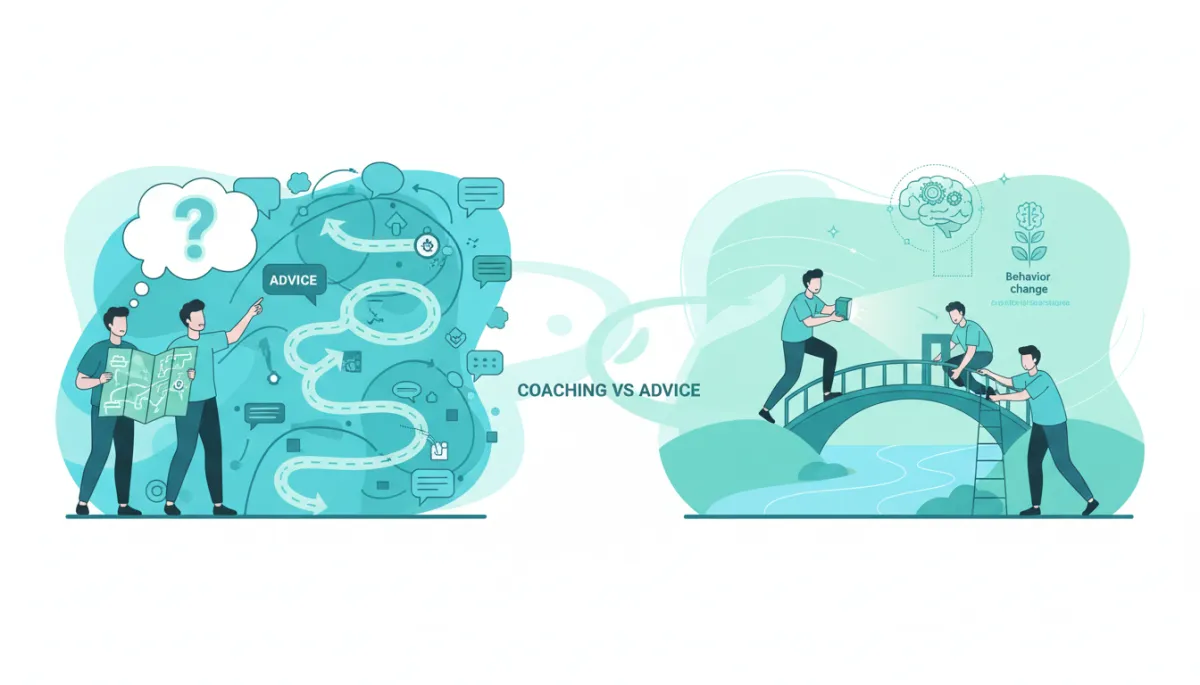
Coaching vs Advice: Guide Discovery, Change Behavior
Coaching, Advice, Behavior Change, Guiding Discovery
At 365 Coach Academy, we often remind aspiring coaches that knowledge is important—and practice matters more.
Coaching vs Advice: Why Guiding Discovery Changes Behavior
We’ve all had that moment when someone shares a problem and, before they even finish, we’re already offering solutions. It comes from a good place, but it’s often not what actually helps. Understanding the difference between Coaching Vs Advice is the first step toward more meaningful, supportive conversations that truly spark behavior change.
Coaching vs Advice: What’s the Real Difference?
On the surface, both coaching and advice happen in conversations, and both are meant to help. But they work in very different ways.
Advice says, “Here’s what I think you should do,” based on the advisor’s experience, opinions, or expertise.
Coaching says, “Let’s explore what matters to you and what will work best in your world.”
When you give advice, you’re the expert and the problem-solver. When you coach, you treat the other person as capable, resourceful, and creative. Coaching conversations are built around questions, curiosity, and reflection rather than instructions. Instead of jumping to “Do this,” a coach asks, “What have you tried?” or “What outcome do you really want?”
💡 Reflection: If you're talking more than the other person, pause and notice what role you're playing in the conversation.
Are you helping them discover their own answers?
Or are you working hard to provide yours?
Neither is inherently right or wrong. The key is being intentional about whether you're educating, advising, or coaching.
How Coaching Conversations Support Behavior Change
Changing behavior is hard. If it weren’t, we’d all stick to our plans, never procrastinate, and always follow through. What makes supportive coaching powerful is the way it works with how people actually change, not how we wish they would.
Effective coaching conversations support behavior change in a few key ways:
They build ownership. When people generate their own ideas and next steps, they feel responsible for the outcome. That sense of ownership makes follow-through far more likely than when they’re just carrying out someone else’s plan.
They tap into intrinsic motivation. Coaching helps people connect goals to their values, strengths, and long-term vision. Behavior change sticks when it’s aligned with what truly matters to someone, not just what sounds like a good idea.
They break change into doable steps. Instead of a big, overwhelming solution, a coach helps identify small, realistic actions. Tiny wins build confidence and momentum.
Imagine a manager whose team member is always late with reports. Advice might sound like, “Use this template and block time on Fridays.” Coaching sounds more like, “What usually gets in the way?” and “What would make this feel easier to complete on time?” The first approach offers a fix; the second helps the person understand their own patterns and design a solution they’ll actually use.

Small, question-led steps make meaningful behavior change feel achievable.
Why Effective Coaches Guide Discovery Instead of Providing Solutions
It can feel faster and kinder to hand someone an answer. Yet effective coaching is less about being the hero and more about helping the other person become their own problem-solver. That’s why great coaches focus on guiding discovery.
For many aspiring and emerging coaches, this is where the real learning begins.
Understanding the difference between coaching and advice is one thing. Applying that distinction consistently in real conversations is something else entirely.
Healthcare professionals, fitness professionals, educators, and helping professionals are often trained to provide answers. Coaching asks us to develop a different skill set—one rooted in curiosity, partnership, and discovery.
That transition takes practice.
Discovery builds confidence. When people realize, “I figured this out,” their confidence grows. They’re more likely to tackle the next challenge without waiting for help.
Discovery fits real-life context. A coach’s solution is based on their experience; a coachee’s solution is based on their reality—schedule, preferences, constraints, and strengths. That makes it more practical and sustainable.
Discovery deepens learning. When someone thinks through options, weighs trade-offs, and chooses a path, they learn skills they can reuse in new situations. Advice often solves one problem; coaching grows long-term capability.
You can feel the difference in the questions coaches ask. Instead of “Have you tried…?” they ask, “What options do you see?” Instead of “Here’s what I would do,” they ask, “What feels like a realistic next step?” This gentle shift from telling to asking is at the heart of supportive coaching.
💬 Practice Opportunity: The next time someone shares a challenge, resist the urge to immediately solve it.
Instead, begin with a question:
"What outcome would feel like a win for you?"
Notice what happens when you create space for reflection before offering solutions.
Bringing a Coaching Mindset into Everyday Conversations
You don’t need the title “coach” to use effective coaching skills. Whether you’re a manager, parent, teammate, or friend, you can shift from quick advice to curious partnership. Start small:
Ask one more question before you offer your opinion.
Reflect back what you’ve heard: “So what I’m hearing is…”
Invite ownership: “Given everything we’ve discussed, what will you do next?”
Over time, these small shifts transform the feel of your interactions. The people around you will feel more heard, more capable, and more committed to their own growth. That’s the real power behind understanding Coaching Vs Advice: you move from fixing problems to fostering lasting behavior change.
Many aspiring coaches discover that coaching confidence does not come from learning more information.
It develops through practice, reflection, feedback, and real-world application.
Knowledge is important.
Practice matters more.
The ability to guide discovery becomes stronger every time you choose curiosity over certainty and partnership over problem-solving.
When in doubt, remember this simple guide:
Advice answers.
Coaching explores.
At 365 Coach Academy, we believe effective coaches are developed through knowledge, practice, reflection, feedback, and real-world application. Understanding the difference between coaching and advice is an important first step. Learning how to confidently apply that distinction in conversation is where growth begins.
Interested in developing your coaching confidence and practical coaching skills?
Schedule an Information Session to learn how 365 Coach Academy helps aspiring and emerging coaches develop confidence, coaching skills, and real-world coaching experience.