Why Information Alone Fails in Behavior Change
Behavior Change, Coaching, Habits, Motivation
Why Information Alone Doesn't Create Lasting Behavior Change
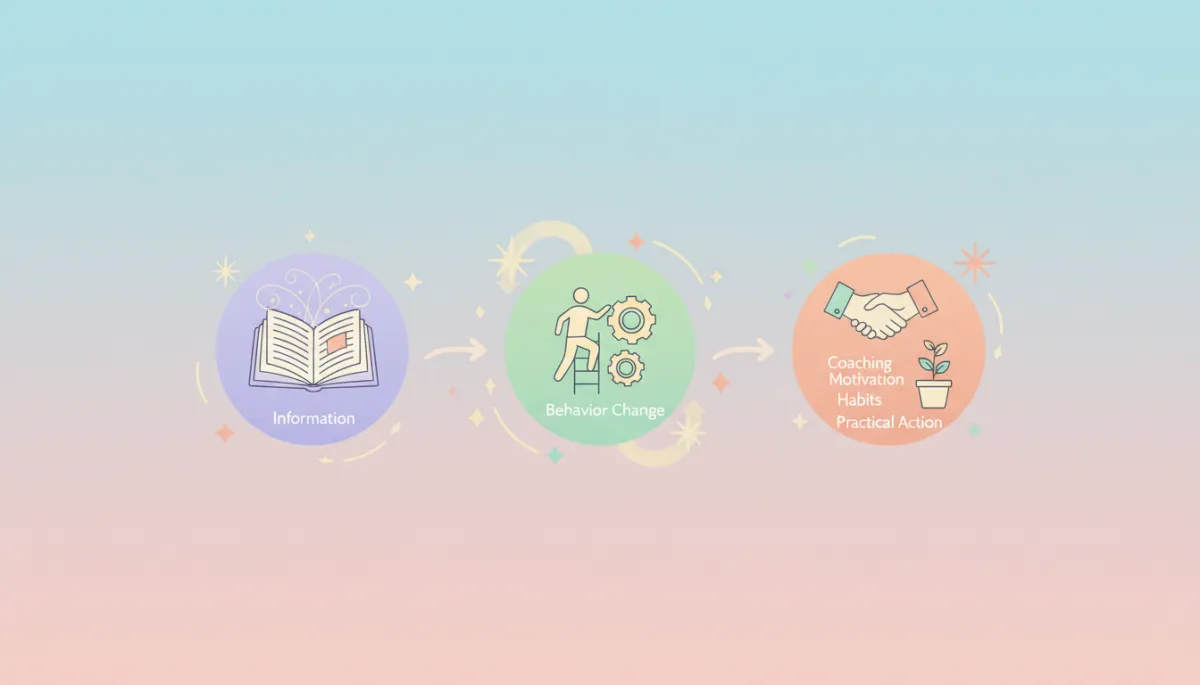
You already know what to do: eat better, move more, save money, sleep earlier, speak kindly to yourself. Yet knowing and doing often feel miles apart. This gap is exactly why information alone rarely creates lasting behavior change—and why coaching, motivation, self-awareness, and practical action matter so much.
1. Why Information Alone Falls Short
We live in an age where you can learn almost anything in a few clicks. Articles, podcasts, online courses, and social media feeds are overflowing with tips on habits and behavior change. If information were enough, we’d all be perfectly healthy, productive, and calm by now.
The problem is that information lives in your head, while behavior lives in your day-to-day reality. Real life comes with stress, emotions, old patterns, and competing priorities. In those messy moments, facts often lose to feelings and routines. You might know that scrolling late at night hurts your sleep, but in the moment, your phone still wins.
Lasting behavior change requires more than knowing what’s “right.” It asks you to rewrite habits, respond differently to triggers, and stay consistent long after the initial excitement fades. That takes support, structure, and a deeper understanding of yourself—not just more information.
2. How Coaching Turns Knowledge Into Sustainable Results
Coaching bridges the gap between “I know” and “I actually do this now.” Instead of handing you more advice, a good coach helps you apply what you already know in a way that fits your life. Think of coaching as a personalized behavior change lab where you experiment, adjust, and grow with someone in your corner.
Clarity: Coaching helps you narrow big goals (“be healthier”) into clear, doable habits (“walk 15 minutes after lunch on weekdays”).
Accountability: Knowing someone will check in with you makes it easier to follow through when motivation dips.
Support, not judgment: A coach helps you learn from setbacks instead of seeing them as proof that you “failed again.”
Over time, coaching helps you build skills: planning, self-reflection, emotional regulation, and realistic goal-setting. These skills turn information into consistent action—and that’s where sustainable results come from.

Coaching transforms vague goals into realistic steps you can actually follow.
Many aspiring and emerging coaches discover that understanding behavior change concepts is very different from helping another person navigate change in real life.
Learning about motivation, habits, and behavior change is important. Developing the ability to support another person's change process requires practice, reflection, feedback, and real-world application.
That is where coaching skills begin to come alive.
3. The Real Role of Motivation in Behavior Change
Motivation often gets blamed when habits don’t stick—“I just wasn’t motivated enough.” But motivation is more like weather than a personality trait: it naturally rises and falls. Waiting to feel inspired every day is a recipe for inconsistency.
What works better is designing your environment and routines so that your habits don’t depend entirely on willpower. For example, laying out your workout clothes the night before or scheduling a weekly coaching session makes it easier to act even on low-motivation days. Motivation still matters, but its job is to help you start—systems and structure help you continue.
💡 Reflection: Instead of asking, “How can I boost my motivation?” try, “How can I make this habit so easy that even a low-energy version of me can do it?”
4. Why Self-Awareness Is a Game-Changer
Self-awareness is the quiet engine behind meaningful behavior change. It’s your ability to notice what you think, feel, and do—without instantly judging yourself. When you understand your patterns, you can work with them instead of fighting them blindly.
Maybe you realize you snack when you’re bored, not hungry. Or that you skip your morning routine on days you check email first. These insights turn “I’m just lazy” into “Oh, this is the moment my old habit usually kicks in.” From there, you can choose a different response—like taking a short walk, texting a friend, or using a grounding breath instead of defaulting to the old behavior.
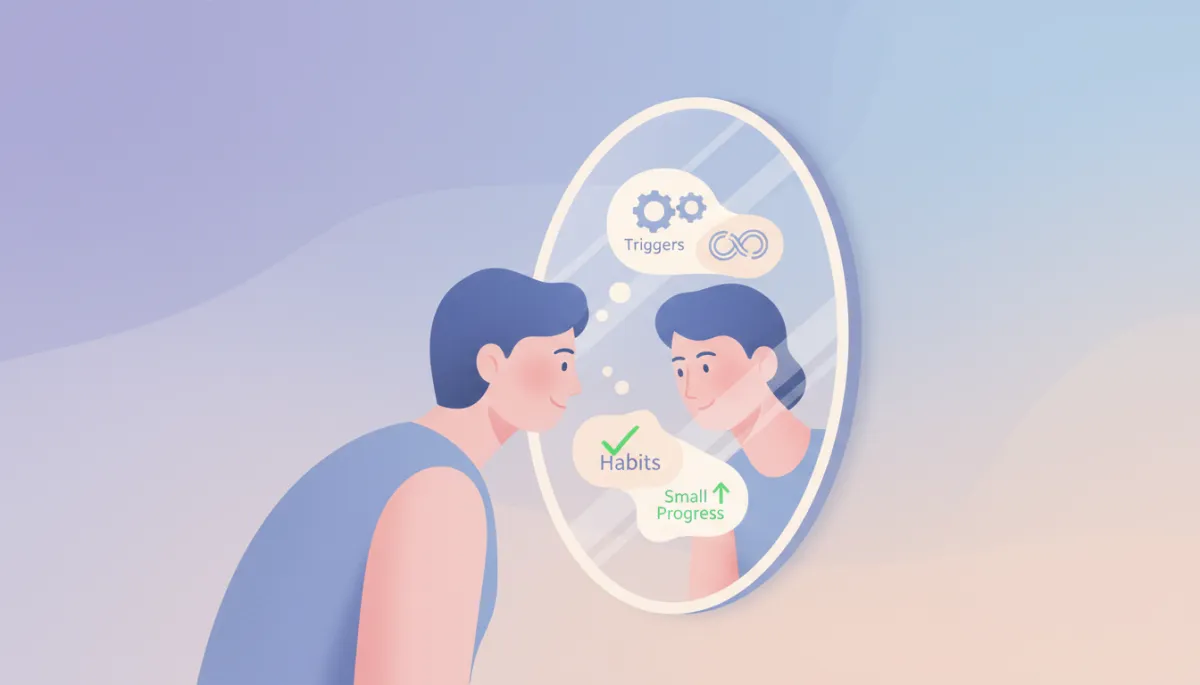
Self-awareness turns confusing patterns into clear choices you can adjust.
5. Practical Action: Small Steps, Big Change
At 365 Coach Academy, we often encourage students to focus on progress rather than perfection.
Small actions performed consistently tend to create far greater results than ambitious plans that never leave the page.
Information, coaching, motivation, and self-awareness all come together in one place: the small actions you take repeatedly. Sustainable behavior change is less about dramatic breakthroughs and more about tiny, consistent shifts that compound over time.
Start tiny: Instead of “I’ll meditate 20 minutes every day,” begin with two minutes after you brush your teeth.
Attach habits: Link a new behavior to something you already do—like stretching while the coffee brews or writing down one win before shutting down your laptop.
Review gently: Once a week, check in: What worked? What didn’t? What small tweak could make next week easier?
These practical steps may seem simple, but they’re powerful because they’re doable. When your habits feel realistic, you’re far more likely to keep going—and that’s where lasting change lives.
Bringing It All Together
Information is a helpful starting point, but it’s only one piece of the behavior change puzzle. Coaching gives you guidance and accountability. Motivation helps you begin, while systems help you continue. Self-awareness shines a gentle light on your patterns. Practical, bite-sized actions turn all of that insight into real results.
If you've ever felt frustrated that "just knowing better" wasn't enough to create change, you're not alone.
Most people do not struggle because they lack information. They struggle because behavior change requires awareness, practice, support, and consistency over time.
At 365 Coach Academy, we believe effective coaches help bridge the gap between knowing and doing. By combining coaching skills, behavior change principles, and practical application, coaches can help others create meaningful and sustainable change.
Interested in learning how to support behavior change through coaching?
Schedule an Information Session to learn more about the 365 Coach Academy Health & Wellness Coach Training Program.